

Stable Audio 3.0
Today we are releasing an API for Stable Audio 3.0, our most advanced AI audio generation model that produces
high-quality, coherent musical tracks up to six minutes long at 44.1kHz stereo. Introducing groundbreaking
audio-to-audio capabilities, Stable Audio 3.0 enables users to upload and transform audio samples using natural language
prompts.Read more about the model capabilities here.Stable Audio 3.0 was exclusively trained on licensed data from the AudioSparx music
library, honoring opt-out requests and ensuring fair compensation for creators.Try Stable Audio 3.0 for free at stableaudio.com.
API Pricing Notice
As of August 1, 2025, we’re increasing the pricing for select API services. See updated pricing here.
API Deprecation and Pricing Notice
We have made a few changes to our API services. These changes will help us maintain high-quality service while investing in new capabilities that benefit our users.Service deprecations: We will no longer support the following API endpoints, effective July 24:
- Stable Video Diffusion API
- Stable Diffusion 1.6 API
- Stable Image Core: Optimized for fast and affordable image generation, Stable Image Core is the next-generation model following SDXL.
- Stable Image Ultra: Our state-of-the-art text to image model based on Stable Diffusion 3.5.
- Stable Diffusion 3.5 model family: Stability AI’s latest base models.
API Deprecation Notice
As of April 17, 2025, we are deprecating the Stable Diffusion 3.0 APIs and automatically upgrading to Stable Diffusion 3.5 APIs at no extra cost.Transitioned Models:
sd3-large->sd3.5-largesd3-large-turbo->sd3.5-large-turbosd3-medium->sd3.5-medium
- Higher-quality images: Stable Diffusion 3.5 offers top-tier performance in prompt adherence and image quality. You can learn more about the model here.
- No action needed: Your API calls will be automatically transitioned.
- Same pricing: You’ll get improved quality at no extra cost. See price list here.
- Stable Image Ultra: Our highest-quality model, powered by SD3.5 Large ($0.08/image), we’d encourage you to try it!
- Stable Image Core: Optimized for speed and cost-efficiency ($0.03/image).
Style Transfer
Today we are releasing Style Transfer on the Stability AI API. This feature allows users to apply visual aesthetics from one image to another by uploading a reference style image and a target image.Unlike our Style Guide API, which extracts stylistic elements from an input image (control image) and uses it to guide the creation of an output image based on the prompt, Style Transfer specifically applies styling from one existing image to another existing image without generating new content.Style Transfer helps maintain brand consistency, unify visual content, and design prototyping. It streamlines the implementation of visual guidelines and facilitates experimentation with different aesthetic directions.As always, all of our APIs come with standard safety features for input filtering, NSFW filtering of input images and generated content, known CSAM content filtering through Thorn, and C2PA signing.
Stable Audio 2.0
Today we are releasing an API for Stable Audio 2.0, our most advanced AI audio generation model that produces
high-quality, coherent musical tracks up to three minutes long at 44.1kHz stereo. Introducing groundbreaking
audio-to-audio capabilities, Stable Audio 2.0 enables users to upload and transform audio samples using natural language
prompts.Read more about the model capabilities here.Stable Audio 2.0 was exclusively trained on licensed data from the AudioSparx music
library, honoring opt-out requests and ensuring fair compensation for creators.Try Stable Audio 2.0 for free at stableaudio.com.
Stable Point Aware 3D
Today we are releasing Stable Point Aware 3D (SPAR3D), a 3D generative AI model that introduces the ability to make real-time edits and create the complete structure of a 3D object from a single image in a few seconds. Introducing a first-of-its-kind two-stage architecture, SPAR3D enables unparalleled control over 3D object generation.Compared to our previous model Stable Fast 3D, this new one allows editing of backside information using the point cloud representation and also leverages a larger Diffusion model to generally improve the depth and backside predictions.Read more about the model capabilities here.This API is currently in preview. Please don’t hesitate to contact us with any questions.As always, all of our APIs come with standard safety features for input filtering, NSFW filtering of input images and generated content, known CSAM content filtering through Thorn, and C2PA signing.
Replace Background & Relight
We are pleased to announce our newest Edit API, Replace Background and Relight. This service enables you to replace the background of your images. Additionally, we have updates to our flagship Stable Image Ultra service and the SD3 & 3.5 service.
New
-
Edit Replace Background & Relight: The Replace Background and Relight service lets users swap backgrounds with AI-generated or uploaded images while adjusting lighting to match the subject. This new API provides a streamlined image editing solution and can serve e-commerce, real estate, photography, and creative projects.
Some of the things you can do include:
- Background Replacement: Remove existing background and add new ones.
- AI Background Generation: Create new backgrounds using AI generated images based on prompts.
- Relighting: Adjust lighting in images that are under or overexposed.
- Flexible Inputs: Use your own background image or generate one.
- Lighting Adjustments: Modify light reference, direction, and strength.
Updated
- Stable Image Ultra: Stable Image Ultra now supports image-to-image.
-
Stable Diffusion 3 & 3.5: The SD3 and SD3.5 models now support the
cfg_scaleparameter. This parameter controls how strictly the diffusion process adheres to the prompt text (higher values keep your image closer to your prompt).
Stable Diffusion 3.5 Medium & Stable Image Ultra
Today we are releasing a new model in the Stable Diffusion 3.5 suite on our API, our most powerful base models yet, and an update to our flagship Stable Image Ultra service:
- Stable Diffusion 3.5 Medium: With 2.5 billion parameters, the model delivers an optimal balance between prompt accuracy and image quality, making it an efficient choice for fast high-performance image generation.
- Stable Image Ultra: Following the release of the Stable Diffusion 3.5 model suite, we are updating the Stable Image Ultra API with Stable Diffusion 3.5 Large, our largest and most powerful base model yet. Stable Image Ultra is our flagship image service, offering the highest quality and detail.
New
- Stable Diffusion 3.5 Medium: This endpoint now supports
sd3.5-mediumin themodelparameter, allowing you to generate images with SD 3.5 Medium.
Updated
- Stable Image Ultra: Stable Image Ultra is now powered by Stable Diffusion 3.5 Large.
Stable Diffusion 3.5 Large & Large Turbo
Today we are releasing Stable Diffusion 3.5 on our API, our most powerful base models yet:
- Stable Diffusion 3.5 Large: At 8 billion parameters, with superior quality and prompt adherence, this base model is the most powerful in the Stable Diffusion family. This model is ideal for professional use cases at 1 megapixel resolution.
- Stable Diffusion 3.5 Large Turbo: A distilled version of Stable Diffusion 3.5 Large. SD3.5 Large Turbo generates high-quality images with exceptional prompt adherence in just 4 steps, making it considerably faster than Stable Diffusion 3.5 Large.
New
- Stable Diffusion 3.5: This endpoint now supports
sd3.5-largeandsd3.5-large-turboin themodelparameter, allowing you to generate images with SD3.5 Large and SD3.5 Large Turbo.
API Deprecation Notice
As of October 11, 2024, we have deprecated a number of our older models and APIs. Below we list the endpoints that are no longer supported and provide recommendations for alternatives.
Deprecated Models
Text-to-image:- stable-diffusion-512-v2-1
- stable-diffusion-xl-beta-v2-2-2
- stable-diffusion-xl-1024-v0-9
- esrgan-v1-x2plus
Recommended Alternatives
Alternative Text-to-Image Solutions:- SDXL 1.0: Our legacy base model for straightforward image generation.
- Stable Image Ultra: Our flagship image service based on Stable Diffusion 3 Large, offering the highest quality and detail.
- Stable Diffusion 3 Model Suite: Latest base models, balancing speed and quality for media, entertainment, and retail.
- Stable Image Core: Optimized for fast and cost-effective image generation.
- Fast Upscaler: Improved speed and quality.
Stable Image Fast Upscaler
We are excited to release our newest Upscale API, Fast Upscaler. This service enhances image resolution by 4x using predictive and generative AI. This lightweight and fast service (processing in ~1 second) is ideal for enhancing the quality of compressed images, making it suitable for social media posts and other applications.
How does the Fast Upscaler compare to our other Upscale Services?
The Fast Upscaler offers a more affordable and quicker alternative to the Conservative Upscaler which can upscale images by 20 to 40 times to a 4 megapixel output image. The Conservative Upscaler can upscale images as small as 64x64 pixels directly to a 4 megapixel output. Use this option if you directly need a 4 megapixel output.If you wish to upscale highly degraded images (lower than 1 megapixel) with a creative twist, we recommend trying the Creative Upscaler.New
- Fast Upscaler: Simple, low-cost upscaler used to increase image resolution by 4x, up to 4 megapixels.
Stable Image Edit Search and Recolor
We are pleased to announce our newest Edit API, Search and Recolor. This service enables you to quickly change the color of a specific object in an image using a prompt.
New
- Edit Search and Recolor: The Search and Recolor service allows to change the color of a specific object in an image using a prompt. This service is a specific version of inpainting that does not require a mask. The Search and Recolor service will automatically segment the object and recolor it using the colors requested in the prompt.
Updated
- Stable Fast 3D: There is a new parameter,
remesh, available which enables the use of the triangle remeshing algorithm during 3D model generation.
Stable Fast 3D
We are excited to introduce Stable Fast 3D, Stability AI’s latest breakthrough in 3D asset generation technology. This innovative model transforms a single input image into a detailed 3D asset, setting a new standard for speed and quality in the field of 3D reconstruction.
New
- Stable Fast 3D: The Stable Fast 3D API generates high-quality 3D assets from a single image in just 0.5 seconds. The model has applications for game and virtual reality developers, as well as professionals in retail, architecture, design and other graphic-intense professions. Stable Fast 3D rapidly generates a complete 3D asset, including:
- UV unwrapped mesh
- Material parameters
- Albedo colors with reduced illumination bake-in
- Optional quad or triangle remeshing (adding only 100-200ms to processing time)
Stable Image Control Style
We are pleased to announce our newest API, Control Style.
New
- Control Style: The Control Style service extracts stylistic elements from an input image (control image) and uses it to guide the creation of an output image based on the prompt. The result is a new image in the same style as the control image.
Stable Diffusion 3 Medium Release
Today we are excited to announce the release of Stable Diffusion 3 Medium! This 2 billion parameter model is now available for use in the REST API and the weights can be downloaded from HuggingFace.
Updated
- SD3: This endpoint now supports
sd3-mediumin themodelparameter, allowing you to generate images with SD3 Medium.
Stable Image Generate Ultra
Today we are excited to announce Stable Image Generate Ultra, our latest and most powerful image generation service.
New
- Ultra: The Ultra image generation service creates the best quality images with the best alignment to prompt. It is Stability’s highest quality image generator and leverages the latest models for the highest quality and prompt adherence.
Stable Image Erase Object & Conservative Upscale
Today we are pleased to announce two new services, Erase Object and Conservative Upscale. These new endpoints enable exciting new workflows. Additionally, we have made enhancements to Outpaint.
New
- Erase Object: The Erase Object service removes unwanted objects, such as blemishes on portraits or items on desks.
- Conservative Upscale: This service takes images between 64x64 pixels and 1 megapixel and upscales them all the way to 4K resolution. Put more generally, it can upscale images ~20-40x times while preserving all aspects. Conservative Upscale minimizes alterations to the image and should not be used to reimagine an image.
Updated
- Outpaint: Now supports outpainting up to 2000 pixels in any direction (up from 512 px) and a new creativity parameter which controls the likelihood of creating additional details not conditioned by the initial image.
Stable Image Control Sketch & Control Structure
We are excited to announce two new services, Control Sketch and Control Structure. These are the first in our suite of Control-related services. Additionally, we have made improvements to Outpaint and Creative Upscale.
New
- Control Sketch: This service offers an ideal solution for design projects that require brainstorming and frequent iterations. It upgrades rough hand-drawn sketches to refined outputs with precise control. For non-sketch images, it allows detailed manipulation of the final appearance by leveraging the contour lines and edges within the image. Check out the docs to learn more.
- Control Structure: This service excels in generating images by maintaining the structure of an input image, making it especially valuable for advanced content creation scenarios such as recreating scenes or rendering characters from models. Check out the docs to learn more.
Updated
- Outpaint: Significantly improved coherence and diversity in the outpainted image area. Fixed a bug where some down outpaint tasks failed.
- Creative Upscale: Significantly faster outputs and improved quality in photorealism. Improved diversity in non-photorealistic outcomes.
Stable Image, Stablevideo.com, and v2beta API
This release note covers:
- Stable Image Services
- Stable Video
- REST API v2beta and legacy
Stable Image
We are proud to announce Stable Image Services, Stability AI’s new flagship suite of API services for image. Stable Image offers the best-in-class experience for developers building products in the design space, and is categorized into four sets:- Generate: The premium image generation services. This includes the new flagship Stable Image Core service, which leverages the latest models. Older simple model services of SDXL 1.0 and SD 1.6 are also represented in this category. Stay tuned for Stable Diffusion 3 to be added to this category as well.
- Upscale: The best image enhancement services. This includes the Creative Upscaler as well legacy ESRGAN upscaler.
- Edit: The ideal services for inpainting, outpainting and similar image editing tools. Includes the new Search and Replace service that enables natural language image editing.
- Control: The premium image-to-image service that leverages advanced models like ControlNets. Perfect for advanced users that want precise control over image generation.
Stable Video
We are also excited to announce a new platform for video generation, stablevideo.com. Following up on the API release of SVD 1.1, the new stablevideo.com web application is a perfect reference implementation for those hoping to try out Stability’s SVD 1.1 API and explore building something similar. We will be continuously improving this site. Expect to see more services across modalities appearing on stablevideo.com.REST API v2beta
We have been working to improve our API services for improved reliability and ease of use.All new services are being released in the REST v2beta API, which includes both synchronous and asynchronous modes.Our documentation is being updated as such. All other services are being moved to the “Legacy” section. Services in “Legacy” are going to be in maintenance mode, and new features in the API will not be added to these services.We are not deprecating Legacy API services, however we intend to upgrade all services to REST v2beta over time, where they will benefit from improved services that are on our API roadmap.Stable Video API Update
We are excited to launch an update of the Stable Video API. This drop-in upgrade provides a general improvement to the
Stable Video API, including a 20 second improvement in speed and significantly better quality and coherence.By our estimates, the need for cherry picking is now significantly lower by comparison to the previous API as well as to
competing products. Hop over to the Stable Video page to learn more!As we continue to enhance our suite of API services for Generative Media, stay tuned for upcoming API releases in video
image, 3D, and audio.
Stable Video Diffusion API Alpha Release
Overview
We are excited to announce the alpha release of the Stable Video Diffusion API! This release marks a major milestone in our ongoing quest to develop versatile models for diverse applications. For more information please see our Getting Started page introducing the Stable Video API.Example Output
What’s New
- Added
/v2alphato the REST API. This version includes support for the alpha Stable Video Diffusion API!
Stable Diffusion v1.6 Release
Overview
We’re excited to announce the release of the Stable Diffusion v1.6 in the REST API! This model is designed to be a higher quality, more cost-effective alternative tostable-diffusion-v1-5 and is ideal for users who are looking to replace it in their workflows. stable-diffusion-v1-6 has been optimized to provide higher quality 512px generations when compared to stable-diffusion-v1-5.Prompt:A wolf in Yosemite National Park, chilly nature documentary film photographyDimensions:512x512Steps:50Seed:1CFG Scale:7Sampler:DDIM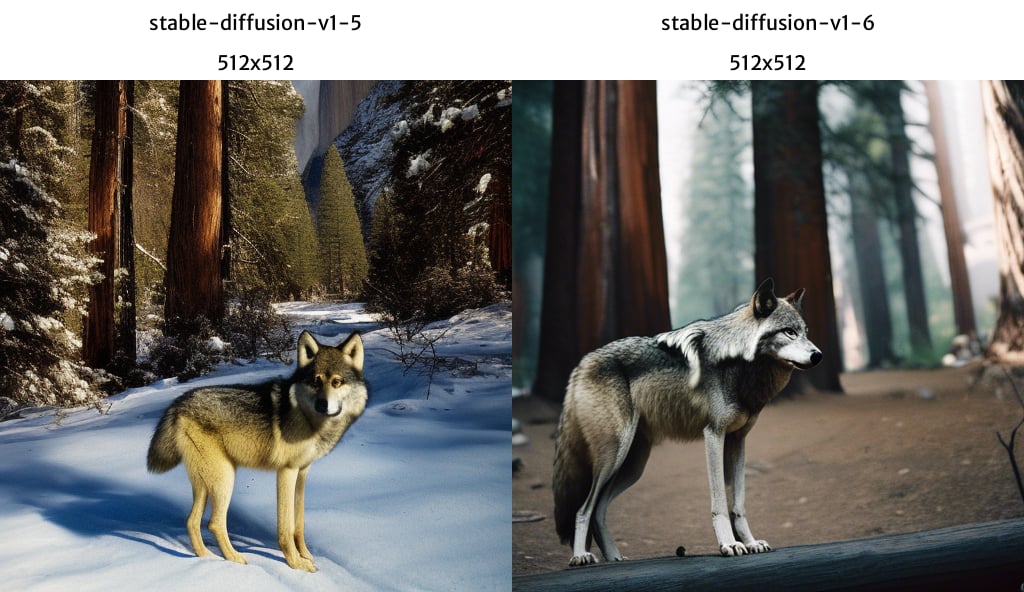
stable-diffusion-v1-6.What’s New
API
- Introduced support for the
stable-diffusion-v1-6engine to the REST API.
Deprecations
- A number of our legacy models will be deprecated by the 15th of November. Please visit the API Parameters page for additional information.
SDXL v1.0 Release
Overview
We’re excited to announce the release of Stable Diffusion XL v1.0, the first major version release in the SDXL series!What’s New
Building upon the success of the SDXL v0.9 release, SDXL v1.0 brings with it a number of image detail improvements. Specifically, SDXL v1.0 offers enhanced vibrancy and overall color tone accuracy, including deeper black and brighter white tones.Prompt:A wolf in Yosemite National Park, chilly nature documentary film photographyNegative Prompt:3d render, smooth, plastic, blurry, grainy, low-resolution, anime, deep-fried, oversaturatedSteps:50Seed:992446758CFG Scale:8Left Model: stable-diffusion-xl-1024-v0-9 AKA SDXL v0.9 Right Model: stable-diffusion-xl-1024-v1-0 AKA SDXL v1.0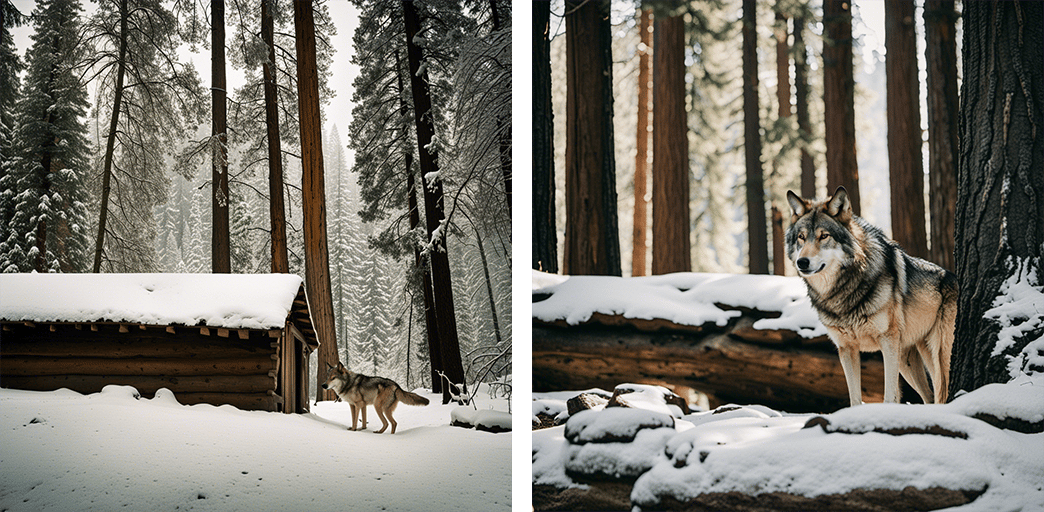
API
- Introduced support for the
stable-diffusion-xl-1024-v1-0model engine to the API (gRPC SDK + REST), which brings with it new pricing considerations. Please check out the Pricing page for additional information. stable-diffusion-xl-1024-v1-0is now the default engine for the API. If you wish to use a different engine, you must specify it in your request.stable-diffusion-xl-1024-v1-0supports a variety of aspect ratios. Please check the API Parameters page for additional information.
SDXL v0.9 Release
Overview
We’re excited to announce the release of Stable Diffusion XL v0.9, the newest model in the SDXL series! Building on the successful release of the Stable Diffusion XL beta, SDXL v0.9 brings marked improvements in image quality and composition detail. Please be sure to check out our blog post for more comprehensive details on the SDXL v0.9 release.What’s New
SDXL v0.9, trained at a base resolution of1024 x 1024, produces massively improved image and composition detail over its predecessor.Prompt:A wolf in Yosemite National Park, chilly nature documentary film photographyNegative Prompt:3d render, smooth, plastic, blurry, grainy, low-resolution, anime, deep-fried, oversaturatedLeft Model: stable-diffusion-xl-beta-v2-2-2 AKA SDXL v0.8 Right Model: stable-diffusion-xl-1024-v0-9 AKA SDXL v0.9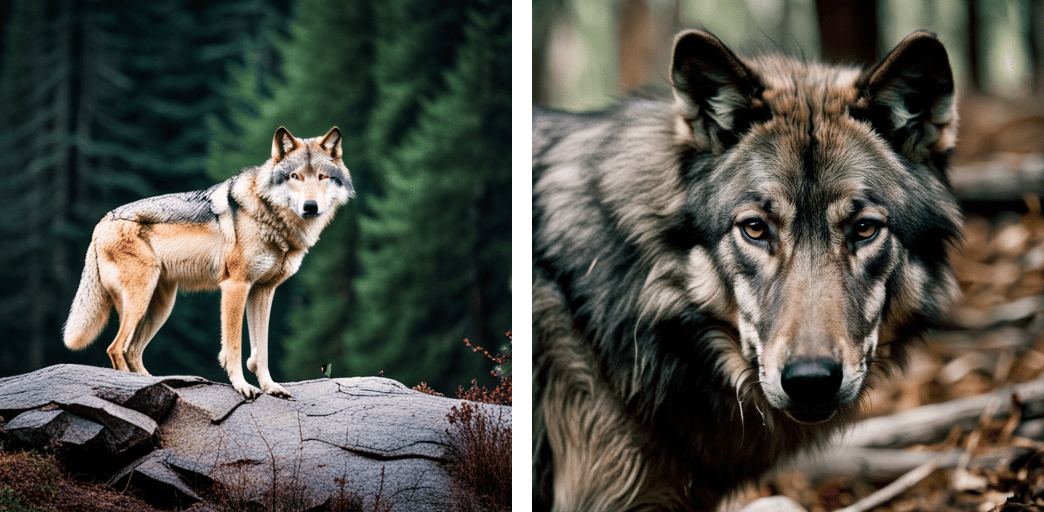
A wolf in Yosemite National Park, chilly nature documentary film photographyNegative Prompt:3d render, smooth, plastic, blurry, grainy, low-resolution, anime, deep-fried, oversaturatedDimensions: 1344x768Model: stable-diffusion-xl-1024-v0-9 AKA SDXL v0.9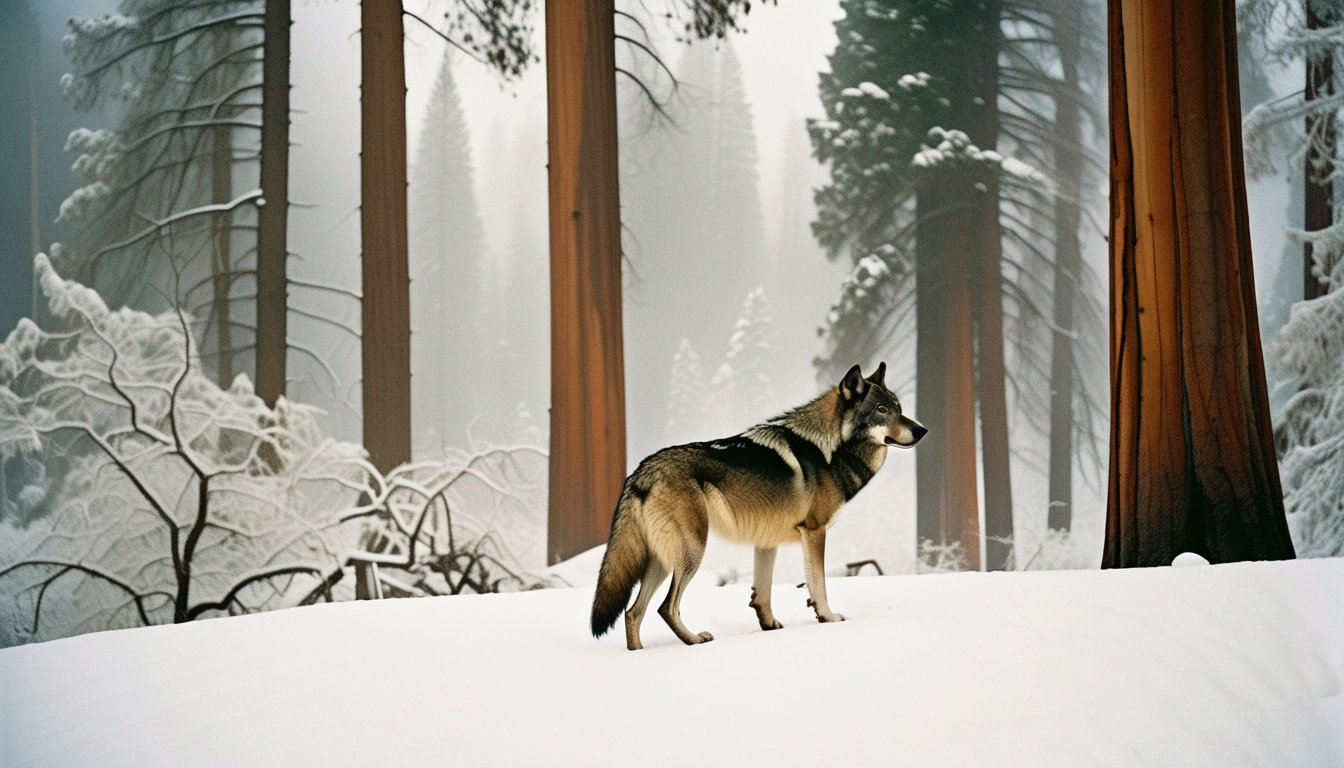
API
- Introduced support for the
stable-diffusion-xl-1024-v0-9model engine to the API (gRPC SDK + REST), which brings with it new pricing considerations. Please check the SDXL v0.9 Pricing Table for additional information. stable-diffusion-xl-1024-v0-9is now the default engine for the API. If you wish to use a different engine, you must specify it in your request.stable-diffusion-xl-1024-v0-9supports a variety of aspect ratios. Please check the API Parameters page for additional information.
Stable Animation SDK Release
Overview
We are excited to announce the release of the Stable Animation SDK, a powerful tool designed to empower artists and developers by leveraging Stable Diffusion to creating stunning animations!Explore the possibilities by generating animations using various inputs: text prompts (without images), source images, or source videos. Animate with all of our Stable Diffusion models, including Stable Diffusion XL, at your fingertips.Check out the three ways to create animations:- Text to Animation: Input a text prompt and adjust various parameters to generate an animation.
- Text Input + Initial Image Input: Provide an initial image as the starting point for the animation, combined with a text prompt to generate the final output animation.
- Input video + Text input: Use an initial video as the basis for the animation, fine-tuning parameters to create the final output animation guided by a text prompt.
What’s New
API
- Added support for the Stable Animation SDK to the API (gRPC SDK only). Check out the docs to learn more.
Breaking Changes
We’ve introduced a minor breaking change with this release. The utility functionimage_to_prompt has been moved from stability_sdk.client to stability_sdk.utils, and its parameters have been updated:- Old:
image_to_prompt(im, init: bool = False, mask: bool = False) - New:
image_to_prompt(image: Image.Image, type: generation.ArtifactType=generation.ARTIFACT_IMAGE)
Style Presets / Client ID Support
Overview
We’re excited to announce that we’ve released support for style presets to our API!Style presets are a way to apply pre-defined styles to your images. These are the same style presets available in DreamStudio. Style presets are currently only available in our REST API, with support in Stability for Blender and gRPC coming soon.We’re excited to see what you create with them in your own integrations!Dog in a forest, generated with the digital-art style preset using SDXL.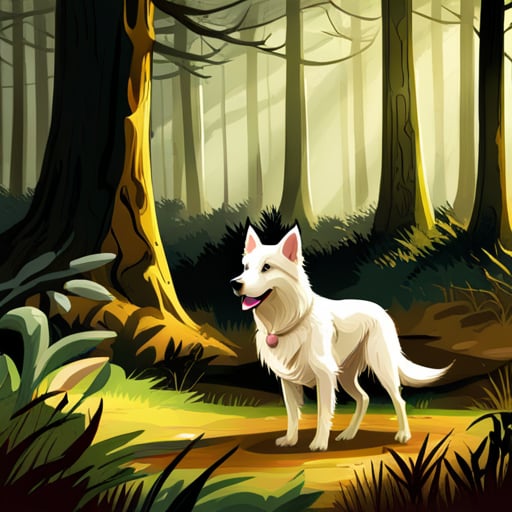
Dog in a forest, generated with the cinematic style preset using SDXL.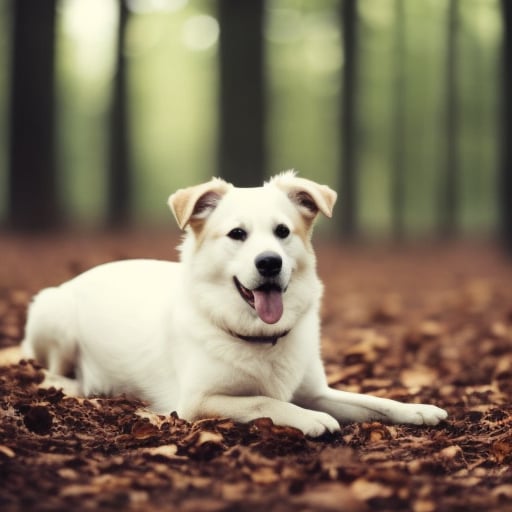
style_preset parameter to the text-to-image, image-to-image and image-to-image/masking endpoints. Check out the REST API docs for more information.What’s New
API
- Added support for style presets via the REST API. Check out the docs to learn more.
- Added support for the
Extrasfield in REST. This field allows you to pass additional information to the generation service for certain beta features. - Added support for passing a
Stability-Client-IDheader to the REST API. This allows Stability to track usage of the API on a per-client basis, and is used in some internal tools. This is not required for normal usage of the API.
SDXL Release
Overview
We’re excited to announce that we’ve released support for SDXL to our API! Please be sure to check out our blog post on SDXL’s release for more information.What’s New
API
- Added support for the
stable-diffusion-xl-beta-v2-2-2model engine to the API (gRPC SDK + REST). This engine comes with special pricing considerations, please visit the API Parameters page to learn more.
- Next-level photorealism capabilities.
- Enhanced image composition and face generation.
- Rich visuals and jaw-dropping aesthetics.
- Use of shorter prompts to create descriptive imagery.
- Greater capability to produce legible text.
Note: stable-diffusion-xl-beta-v2-2-2 comes with some special considerations with regard to the dimensions it can generate images at:
-
stable-diffusion-xl-beta-v2-2-2can generate images at a maximum of either512x896or896x512. As usual, dimensions must be divisible by64pxwhen considering the size of an image generation request. -
If either the width or the height (but not both) of an image generation request is greater than
512px, the other side (width or height, respectively) cannot be beyond512pxin dimension.
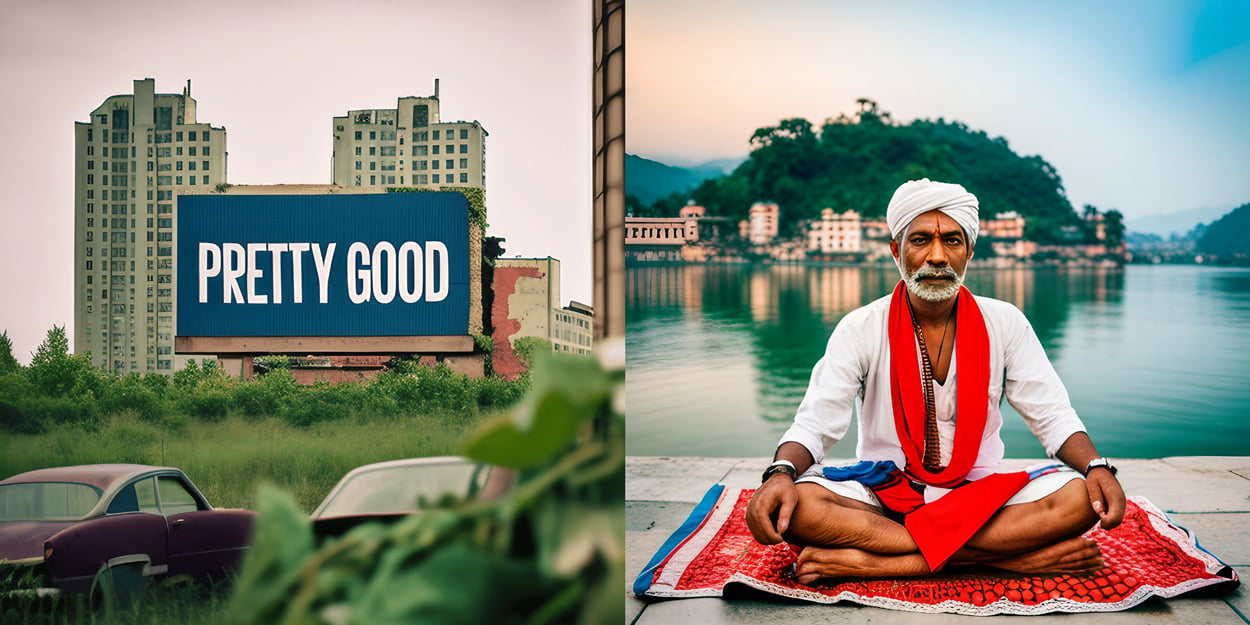
Image Upscaling API and Integrations Release
Overview
We are excited to announce that support for image upscaling has been added to our API! The Image Upscaler is a tool that allows you to upscale images and animation frames using our ESRGAN-based upscaler. It is currently available in our Stability for Blender and Stability for Photoshop plugins, as well as our gRPC and REST APIs. This update also brings a number of other fixes and improvements in each integration.Check out the docs to learn how to use the Upscaler in Photoshop, Blender, and via our API.If you are using our gRPC SDK, you can now use the Upscaler by calling theUpscale method on the Stability service. Check out the gRPC docs for more information. REST support for the upscaler is also available here.What’s New
API
- Added support for image upscaling via the API. Check out the docs to learn more.
Photoshop
- Added the Stability Upscaler - this is a new feature that lets you upscale your layers and documents in Photoshop using the Stability SDK. Click on the ‘Upscaler’ tab to try it out.
- Fixed some issues related to inpainting with DALL-E 2.
- Updated the Stability SDK version to latest.
- Updated the plugin icon to reflect its status as a Stability product.
- Fixed a number of layout bugs related to scrolling and loading new diffusion results.
Blender
- Added the Stability Upscaler - this is a new feature that lets you upscale your render results and textures in Photoshop using the Stability SDK. Click on the ‘Upscaler’ feature at the top of the add-on panel to try it out.
- Added more extensive error handling for REST API request failures.
- Added a timeout to avoid hangs when the underlying generation service times out.
- Fixed a number of bugs reported by users.
REST API v1
Overview
We are excited to announce the REST API v1 is officially live! The documentation has been integrated directly into this site and can be viewed here.If you encounter any issues or have any feedback for us please stop by the #official-rest-api channel in our community Discord and/or open a GitHub issue.If you’re using/v1alpha or /v1beta please take a look at the Deprecations section below.What’s New
Upscaling is now available!
It is now possible to upscale images using the REST API. Check out the upscaling docs for more information.Improved error handling
We’ve added more error handling, improved error messages, and all errors should now include anid field for troubleshooting.
If you encounter an issue please drop a message in the #official-rest-api
channel in our community Discord and include the id field from the response.Breaking Changes
Removed height and width from image-to-image and image-to-image/masking endpoints
These endpoints have always used the dimensions of the provided init_image to determine the dimensions of the resulting image, so accepting height and width was confusing and unnecessary.Passing explicit null values is no longer permitted
Previously, it was possible to pass explicit null values for optional arguments. This is no longer permitted. If you want to use the default value for an optional argument, simply omit it from the request.Deprecations
v1betais now deprecated and is scheduled for removal on May 1st, 2023v1alphawas already deprecated and is now scheduled for removal on May 1st, 2023
What’s Next
What’s coming up next for the REST API:- Add
image-to-depthendpoint tov1 - Add
depth-to-imageendpoint tov1
REST API v1beta Release Candidate
Overview
We are excited to announce the v1beta release candidate for the REST API is officially live! Check out the new and improved documentation here.For this release we’ve taken your feedback into consideration and have implemented some changes based on suggestions shared with us via the #api channel in our community Discord and GitHub issues.The majority of the changes relate to standardizing input parameters and tweaks to input validation, but this release is a big step towards our goal of making the API as straightforward and easy to use as possible.We are looking for feedback from the community to help us improve the API before we release the final version, so please stop by the #api channel in our community Discord and/or open a GitHub issue.What’s New
Height and Width Validation (v1alpha,v1beta)
Height and width validation now allows for a wider range of resolutions, spawned by this issue on GitHub.- The minimum value for either height or width has been lowered to
128 - Instead of imposing a maximum value, we now require that the product of
heightandwidthfall within a certain range based on the type of engine being using:- For 768 engines:
589,824 ≤ (height * width) ≤ 1,048,576
- All other engines:
262,144 ≤ (height * width) ≤ 1,048,576
- For 768 engines:
192x3072 image of a cyberpunk cityscape, generated with v1beta:
Click to Show Prompt
Click to Show Prompt
epic battleground, beautiful synthwave city painting, digital illustration, extreme detail, digital art, 4k, ultra hd, beautiful city at night, long exposure city at night photography, full-color, urban street photography, nightlife, synthwave, cityscape, hd photography, digital art, 4k
Better Error Handling (v1alpha,v1beta)
- Making a request to a 768 engine with less than
768x768pixels will now result in an error instead of generating a distorted image. - Some invalid requests that were possible before are now impossible
- e.g. making a request with a text prompt of
""(empty string) will now result in an error
- e.g. making a request with a text prompt of
- Most errors should be clearer now and contain less noise
- Errors now include an
idfield we can use to help debug issues you run into. If you run into an error, note theidand let us know in the Stable Diffusion Discord so we can help you out!
New Image-to-Image Parameter (v1beta)
We now offer a single parameter image_strength you can use in place of step_schedule_start and step_schedule_end for image-to-image generations
that mimics the behavior of the Image Strength slider in DreamStudio. You can continue to pass in step_schedule_start and step_schedule_end if you prefer as long as init_image_mode is set to STEP_SCHEDULE.For more information, check out the image_strength and init_image_mode parameters of the image-to-image endpoint.Better Image-to-Image Defaults (v1beta)
- For image-to-image generations we now default to
image_strengthoverstep_schedule_startandstep_schedule_end - The default value for
image_strengthis0.35 - The default value for
step_schedule_startis0.65
Breaking Changes
The only intentional breaking change tov1alpha was the addition of more input validation checks. These changes shouldn’t affect most users, and those who are affected
likely weren’t getting the results they expected anyway. If any other breaking changes were introduced, they were unintentional so please notify us via the
#api channel in our community Discord or by opening a GitHub issue.Deprecations
With this release candidate, we are deprecating thev1alpha API.The v1alpha API will continue to be available for the time being, but will be removed in a future release.What’s Next
- Move on to
v1as fast as possible - Move the REST API documentation into this site (currently hosted here)
- Add support for Upscaling
- Add support for Depth-to-Image
REST API v1alpha Release Candidate
Overview
We have been hard at work on the REST API for the past few weeks and are excited to announce that the v1 release candidate is officially live!We are looking for feedback from the community to help us improve the API before we release the final version, so please stop by the API channel in the Stable Diffusion Discord and let us know what you think!What’s New
/image-to-image/maskingendpoint with two options for specifying the mask:mask_imagewhere lighter or darker pixels influence the diffusion process.init_imagewhere transparent pixels influence the diffusion process.
- Improved HTTP error codes:
400s for bad requests.401s for unauthorized requests.403s for insufficient privileges.404s for things like trying to use an engine that doesn’t exist.- Relegated
500s back to internal server errors (where they belong!)
- Improved error messages for all endpoints:
- Magic decoder ring no longer required.
- Fixed small bug causing
nullvalues to show up in the response whenAcceptheader was set toapplication/json. - Addressed some CORS-related issues
Stable Diffusion 2.1 - API Release
Overview
In this release of the Stability API, we are introducing Stable Diffusion 2.1 (512px + 768px), including multi-prompting with prompt weighting.What’s New
New Models- Stable Diffusion 2.1 - 512px
- Stable Diffusion 2.1 - 768px
Stable Diffusion 2.0 - API Release
Overview
In this release of the Stability API, we are introducing Stable Diffusion 2.0 (512px + 768px), including two new samplers, and an improved inpainting model (Stable Inpainting 2.0).What’s New
New Models- Stable Diffusion 2.0 - 512px
- Stable Diffusion 2.0 - 768px
- Stable Inpainting 2.0 - 512px